
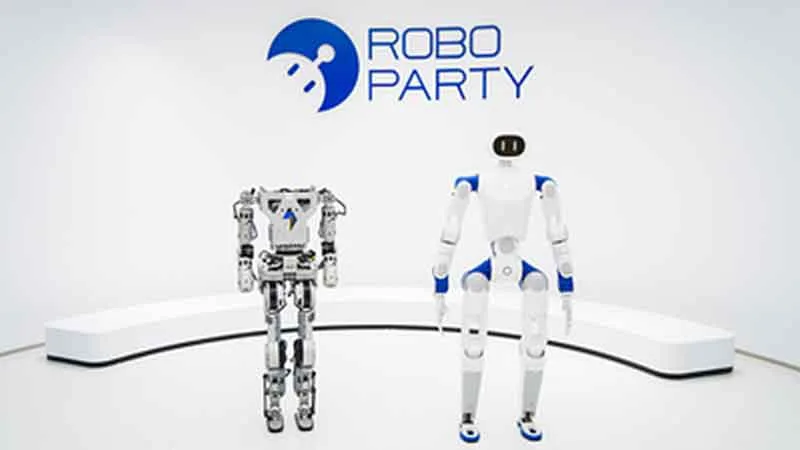
RoboParty introduced RP1, a powerful, fully integrated open-source humanoid robotics platform built to advance research and innovation in embodied AI. Featuring accessible hardware and software alongside flexible, modular design options, RP1 allows researchers to explore its underlying architecture, customize system components, and tailor the platform to meet the specific needs of their robotics projects.
Researchers need to understand how hardware, control systems, and learning algorithms interact, and how changes across those layers affect physical behavior.
RoboParty believes embodied AI should not be built on technological black boxes: every researcher should have the freedom to explore. By sharing engineering resources and development tools, the company aims to make one team’s work a foundation that others can examine, extend, and improve.
RP1’s development stack spans mechanical structures, electronics, ROMOMO actuator technology, motion control, simulation, training, and deployment. Technical documentation and research materials connect the robot’s physical construction with the software that turns algorithms into actions.
Sharing these layers lets researchers work beyond predefined interfaces. When physical behavior differs from an algorithm’s intended output, researchers can investigate the hardware, control methods, and models involved. Access to control interfaces and execution feedback supports comparisons between training results and physical experiments, helping teams identify problems and refine their approaches.
PartyOS, under continuing development by RoboParty Lab, brings together motion control, motion retargeting and learning tools. Higher-level perception, interaction, and task capabilities remain subject to further integration and validation, with additional software components planned for staged open-source release.
The Standard version stands approximately 1.3 meters tall and has 24 active degrees of freedom, supporting gait, balance, and simulation-to-real research. RP1 Pro has 30 active degrees of freedom, including a two-axis neck and seven axes per arm, providing configuration options for end-to-end policy research, human-robot interaction and embodied data collection. Both counts exclude dexterous-hand degrees of freedom.
Interchangeable head modules and wrist-mounted end effectors, together with the RP Hand dexterous hand and expandable computing options, allow teams to configure the platform around manipulation and model-development experiments. Open-source hardware and software resources support modifications as research requirements change.
Teams can compare control methods on the same hardware or retain a method while investigating hardware changes. Robot models, software configurations, and experiment records help researchers trace those differences and support repeated testing under documented conditions.
This gives teams a shared platform for different research questions, while keeping changes and test conditions visible. Each configuration still requires matching models, control settings, and validation for the intended task.
Established in Shanghai in 2025, RoboParty focuses on creating humanoid robotic systems, integrating hardware, motion control, software, and open-source resources to advance robotics research and foster innovation in embodied AI.