
Beckhoff Automation is expanding its MX-System Designer with artificial intelligence (AI)-assisted engineering, enabling machine builders to generate automation system architectures using natural-language prompts. The development is designed to simplify the planning of control cabinet-free machines by reducing the need for manual component selection and configuration.
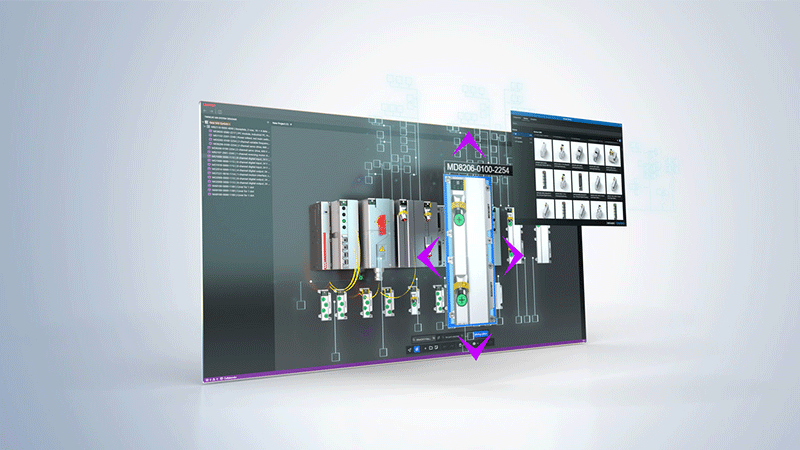
With the web-based MX-System Designer, system architectures based on the MX-System can be modelled graphically and checked for technical consistency as early as the concept phase. Everything is included, from the baseplate with industrial PC and drive, system, and I/O modules through EtherCAT Box modules from the EP series, and even a selection of around 1,500 pre-assembled cable options.
The prompt-based interface complements the existing graphical planning features in the MX-System Designer. Instead of using drag and drop to assemble the components themselves, users write their automation tasks in natural language. This script provides a prompt for the AI. System generation is based on the metadata of the components stored in the Designer and their connection options. They are also used for technical validation.
The AI uses this information to identify suitable modules, recommend a solution, and set up the system – complete with all cable connections – directly in the Designer. Design engineers do not need to memorize product catalogs. With the AI-based MX-System Expert at their side, they get sound, well-thought-out proposals in next to no time. The built-in plausibility check provides a check and balance mechanism. It calculates the total power requirement, checks the load distribution within the baseplate, monitors the power limits of the individual modules, and even calculates voltage drops over the defined cable lengths. The AI analyzes the relevant feedback and gradually refines its design until a technically viable configuration is achieved. Machine builders review the designs in the Designer and approve them, thereby retaining control over the system architecture.
For machine and system engineering, this means significant time savings in the engineering process. Electrical designers and engineers do not have to spend a great deal of time familiarizing themselves with system infrastructures and product portfolios. They quickly arrive at a robust initial system design, which can then be refined to meet their specific requirements.